


Now that you’ve learned how to calculate and manage your burn rate, it’s crucial to maintain a vigilant eye on your financial metrics. This section covers the what is the formula for determining burn rate importance of continuous monitoring, the tools and metrics to help you track burn rate, and how to create a forecast for your business’s financial future. Now that you’ve gained a solid understanding of how to calculate burn rate and the factors influencing it, let’s delve into the practical aspects of managing your burn rate effectively. These strategies can be the difference between financial stability and potential distress for your business. By understanding these factors and their potential effects on your burn rate, you can proactively manage your business’s financial stability and make informed decisions to adapt to changing circumstances. Understanding the factors that influence your burn rate is vital for effective financial management and long-term business sustainability.
- This measurement is a concept called “runway,” which we’ll discuss in detail in the next section.
- Generally speaking, a start-up of this size with $7.5mm in run-rate revenue (i.e., $625k × 12 months) is likely near the midpoint between an early-stage and growth-stage classification.
- It accounts for how much money you have on hand and what you’re spending, and it’s a good way to spot potential cash flow issues before they become a serious problem.
- If you sell high-value products or services, check your customer’s credit score before delivery to ensure they can pay their bills.
- In turn, investors use this metric to assess the financial health and sustainability of a business, so they know whether it’s worth investing in.
- In conclusion, employing financial tools like a burn rate calculator, financial modeling, and valuation enables businesses to manage their burn rate effectively.
- On the other hand, the actual burn rate represents the current pace at which the project is utilizing its budget, based on real-time expenses incurred up to the present.
Avoid sneaky fees and increase your margins
- If your burn rate is too high, it could put your business at risk of running out of cash.
- Keeping track of your burn rate is important when managing projects as it is critical work performance information that should be communicated to key stakeholders.
- Let’s explore these key factors in detail, starting with revenue generation.
- In order to accurately calculate your burn rate, it’s essential to differentiate between fixed costs and variable costs.
- Easy-to-use timesheets for employees that actually get filled out, with a simple review and approval process.
This involves keeping a close eye on your cash balance, cash reserves, operating expenses, overhead, and marketing costs. By analyzing these financial components, businesses can identify areas where expenses can be reduced without compromising growth or operations. Cash flow is a Accounting Security vital metric for businesses, reflecting the inflow and outflow of money during a specific period. It helps in determining a company’s financial health, ability to sustain operations, and potential for growth.
Raise Funds

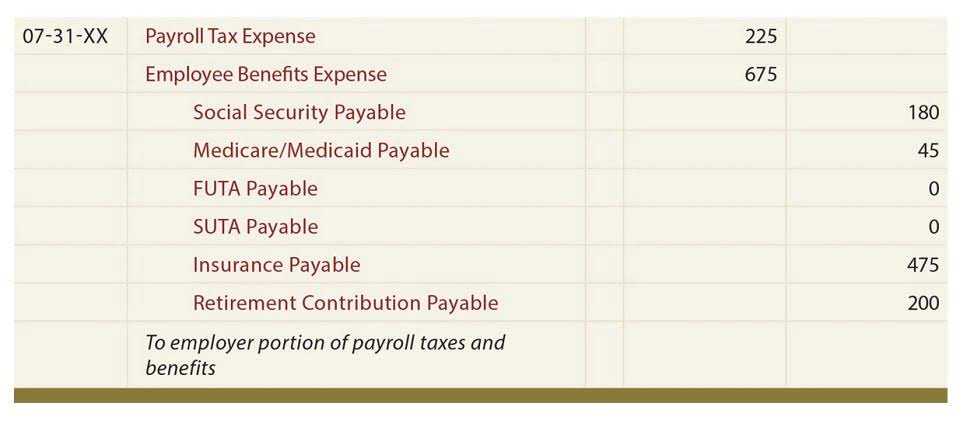
Bringing on a new full-time employee doesn’t just cost the company the worker’s monthly wages. The company is also on the hook for any additional compensation, benefits, its portion of payroll taxes, and the supporting materials and resources the employee will need to complete work. As illustrated by the formulas above, the main factors that dictate burn rate are the company’s spending activities. For instance, if a company has a burn rate of $40,000 per month, and they have $120,000 cash available, then it could operate for three more months before becoming insolvent. A higher burn rate means a shorter runway, so companies need to manage their spending carefully. The calculation of burn rate involves analyzing expenditure categories to determine how much money is spent over a specific period.
- One of the key reasons companies should monitor burn rate is that it helps them determine their runway, thereby showing how much longer they can operate on current cash reserves.
- An example of someone confused is the Corporate Finance Institute which shows an image of Net Burn, but then shows gross and net runway as burn rates.
- Here are some general principles to help you better understand the concept – including what a good burn rate looks like.
- A higher burn rate means that a business is using up its capital more quickly and is at risk of running out of money sooner.
- If you’re under 6 months away from Zero Cash Day, you should be looking to cut costs dramatically or raise funding.
How to Calculate Burn Rate

However, the main reason for calculating burn rate is to help entrepreneurs and investors Certified Public Accountant understand how long in terms of months it will take for the company to run out of cash. If a company has any revenue, the operating expenses can be subtracted from revenue to find its operating profit. Net burn rate will be a smaller number than gross burn rate, since revenue is subtracted from the gross burn rate. This is the most important figure, especially in the case of a company with no revenue.
Also Read: Related Metrics
Thus, burn rate is a measure of negative cash flow, representing how much cash the company shells out during a given period. Learn how to calculate burn rate effectively by understanding key expenditure categories and choosing the right time frame for your business. The implied cash runway comes out to 7 months, which means that assuming no cash sales going forward, the start-up could continue to operate for 7 months before needing to raise financing.
- Gross burn rates encapsulates all monthly cash operating expenses, including monthly costs like rent and salaries, and variable costs that fluctuate with business activities.
- It also informs the financial decisions needed to sustain operations before cash reserves are depleted.
- Burn rate is a useful metric for investors and business owners because it provides a snapshot of the company’s financial health and can help determine if a company is spending too much or too little.
- Burn rate explains how quickly your business is using up its cash reserves.
- Are you ready to navigate the financial landscape of your business and ensure it stays on a path of sustainable growth and success?
- Fred Wilson shares some of his wisdom on how much a startup might be spending at different stages of building a startup.
- For a revenue-generating company, it may not be as easy to determine how to reduce expenses and improve burn rate.
How to Increase Revenue?

«They shout about hiring, hiring again and then hiring some more,» says Morrish. Now we need to divide the difference by the number of months in the period to find out the burn rate. The first step is to calculate the difference between the beginning cash balance and the ending cash balance of the last quarter of the year. However, it is imperative to ensure that the project’s quality and scope remain intact, and that the pursuit of reducing the burn rate does not compromise the overall success of the project. Companies, regardless of size, can benefit from regularly monitoring their burn rate as it improves financial decision-making, leading to enhanced operational efficiency. Sugar & Spice Bakery was generously funded by an angel investor and has $50,000 in total cash reserves.